
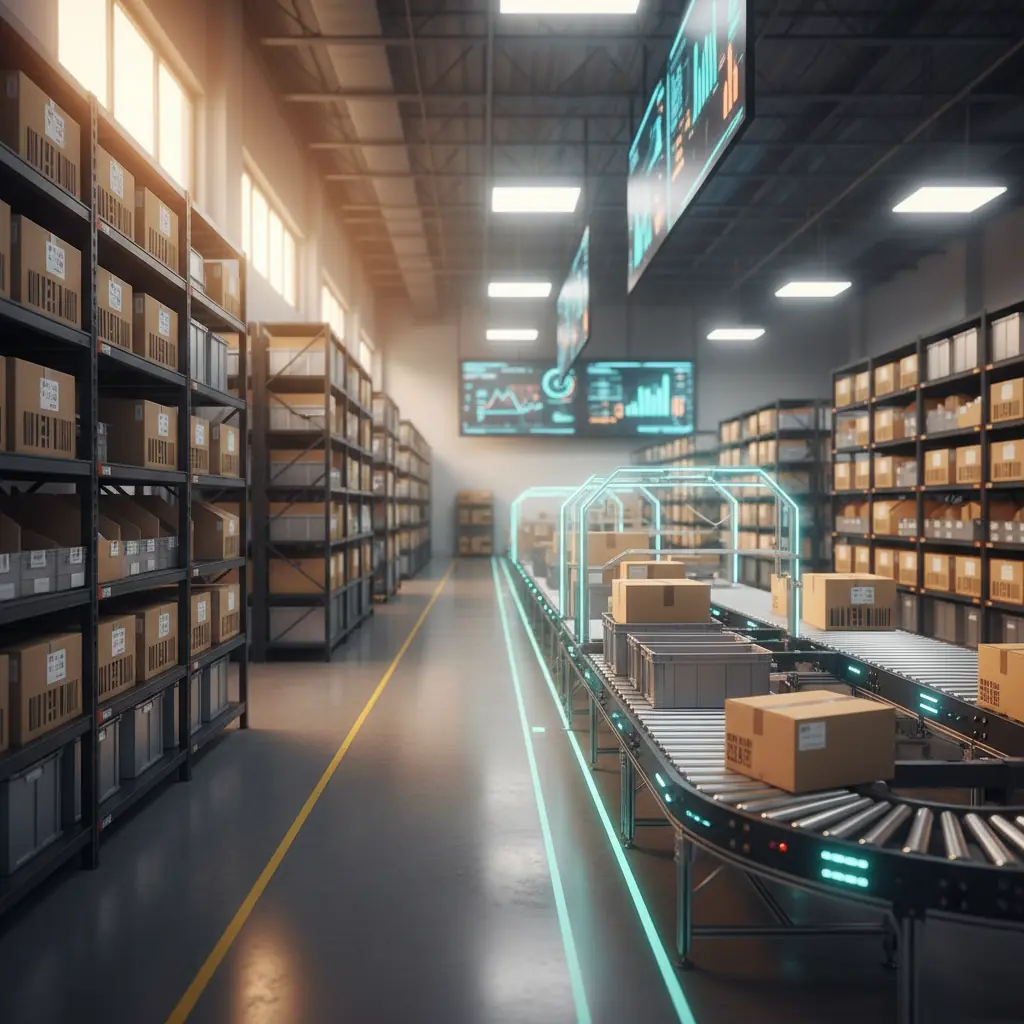

The Warehouse Is No Longer Just Storage
Not long ago, most companies judged a warehouse by a simple test: what came in eventually went out, without too much going missing. That test no longer holds. Online shoppers expect delivery in a day or two. Distributors serving hundreds of retail outlets are asked for smaller, more frequent drops. Factories want material at the line when it is needed, not a week early. The warehouse now sets the pace for the whole business.
Saudi Arabia adds its own momentum. The National Transport and Logistics Strategy, launched by the Crown Prince in June 2021, aims to lift the sector's share of GDP from 6% to 10% and place the Kingdom in the global top ten of the logistics performance index. That means investment in logistics zones, ports and air cargo, and sharper competition on storage and distribution efficiency.
This article looks at the trends reshaping warehouse operations from a practical angle: what each one means for a mid-sized warehouse in Riyadh, Jeddah or Dammam, when it is worth the money, and what has to be in place first.
1. Cloud Warehouse Management and Real-Time Visibility
The most widespread trend, and the cheapest, is moving from spreadsheets and basic stock tools to a cloud warehouse management system connected to sales, purchasing and accounting. The point is that everyone sees, at the same moment, what is in stock and exactly where: not just which warehouse, but which aisle, rack and bin.
In practice:
- Sales sees genuinely available stock before promising a customer, not a gross figure that includes quantities already allocated to other orders.
- Purchasing sees balances across branches and transfers stock instead of buying more.
- Management follows every site from anywhere instead of waiting for a weekly report.
Cloud also lets a small company run a proper system without servers or an in-house IT team. It does raise questions for the vendor: where is data hosted, how is it protected, and how does the provider address the Personal Data Protection Law (in force since September 2023) and the National Cybersecurity Authority's Cloud Cybersecurity Controls? For a fuller view of what these systems deliver, see our article on the benefits of a warehouse management system.
2. Scanning Every Movement: Barcodes, QR and RFID
Real-time visibility is impossible if movements are typed in at the end of the day. The clear trend is that every movement, from receipt to putaway to picking to dispatch, is captured by a scan on a handheld or a phone.
| Technology | Relative cost | Best fit | Limits |
|---|---|---|---|
| Barcode | Very low | Most warehouses and most items | Needs line of sight, one scan per item |
| QR code | Low | Items carrying more data, such as batch and expiry | Much the same as barcodes |
| RFID | Clearly higher | High-value items, reusable totes and pallets | Tag and reader cost, interference from metal and liquids |
Hypothetically, a building materials warehouse logged issues in a notebook that was keyed into the system each evening. Three months after switching to scanning at the point of issue, the first sample count showed a clear rise in matching items and far fewer sales of stock that was not actually there. Nothing changed in the building or the racking. Only the moment of recording changed: at the movement, not hours later.
The practical rule: get barcodes into every movement before thinking about RFID. Most accuracy gains come from scanning discipline, not from the type of tag.
3. Automation Sized to the Business
Autonomous mobile robots, automated storage and retrieval systems and sortation used to be reserved for huge distribution centers. Smaller configurations now exist, and some can be leased. But automation is an investment decision, not a technology decision, and it needs to be costed.
Worked payback example (hypothetical)
A distribution warehouse runs 12 pickers over two shifts at a fully loaded cost of SAR 5,500 per person per month. A goods-to-person robot system is quoted at SAR 1,400,000 and is expected to lift picking productivity so that 6 pickers can handle the same volume, with SAR 120,000 a year in maintenance and subscription.
- Annual labor saving: 6 × 5,500 × 12 = SAR 396,000.
- Net saving after maintenance: 396,000 minus 120,000 = SAR 276,000.
- Approximate payback: 1,400,000 ÷ 276,000 = about 5 years.
Is that acceptable? It depends on how long you expect to use the building, whether it is leased on a short term, and whether volume is growing. If volume will double in three years, automation absorbs the growth without matching headcount and the case improves. If the lease ends in three years, fixed automation is a risk. The example ignores financing cost, but it shows that the decision needs numbers, not a vendor demo.
One prerequisite applies to all automation: accurate item data, from dimensions and weights to storage locations. A robot does not fix a messy warehouse. It runs the mess faster.
4. Omnichannel Fulfillment
One company may now sell through its showrooms, its own web store, online marketplaces and a wholesale sales force. Each channel orders differently: wholesale orders are large and few, web orders are small, frequent and expected fast.
A warehouse designed for wholesale struggles when 400 small orders land in a day. The trend shows up in several ways:
- One inventory pool for all channels, rather than ring-fencing stock in advance, with allocation rules that stop the same unit being sold twice.
- Batch picking: instead of walking the whole building for each order, a picker collects items for several orders in one route and sorts them afterwards. Our article on batch picking explains how.
- A fast-pick zone near packing for the items that sell most online.
- Returns as a process of its own: inspect, restock or write off, and update the balance the same day.
5. Smaller Sites Closer to the Customer
Instead of one large central warehouse, retailers and distributors are moving to a central hub plus small fulfillment points inside or near cities. The aim is to shorten last-mile delivery, usually the most expensive part of distribution.
Hypothetically, a household goods distributor serves north and east Riyadh from a central warehouse in the south. Each driver round trip averages two hours and a driver completes 12 deliveries a day. After opening a small fulfillment point in the north stocking the 300 items those districts order most, travel time falls and deliveries per driver rise. The real gain is not in rent; it is in drops per driver and the ability to offer same-day delivery.
The model makes inventory harder to manage. You now run balances at several sites and need constant decisions about what to hold where, in what quantity, and when to replenish from the hub. Without a system that sees every site and proposes transfers, small sites fill up with slow movers while the items customers want run out.
6. Data-Driven Operations
A warehouse generates a lot of data: every receipt, pick and move. The trend is to use it to improve operations, and the clearest example is slotting by velocity.
Slotting example (hypothetical)
A spare parts warehouse holds 3,000 SKUs. Three months of pick history show that 450 SKUs, 15% of the range, account for 70% of picks, and they were scattered across the aisles. Moving them to the aisles nearest dispatch, at waist height, cuts average walking distance per order and raises orders completed per picker hour.
That is ABC analysis applied to pick frequency instead of value. Our guide to ABC analysis covers the classification method. Other useful analyses include:
- Forecasting weekly workload from sales data to plan shifts ahead of peaks such as Ramadan and back-to-school.
- Flagging dead stock that has occupied space for months without moving.
- Analyzing pick errors by item, location and picker.
7. Labor Management and Safety
Even with automation, people remain at the center of most warehouses. The trend is objective productivity measurement, task allocation based on actual workload, and better safety.
- Clear productivity measures: lines picked per hour, pick accuracy, dock-to-stock time.
- System-directed tasks: rather than a supervisor assigning work verbally, the system releases tasks by priority and location.
- Heat safety: in Saudi Arabia, work under direct sun is banned from 12pm to 3pm between 15 June and 15 September. Warehouses with open yards or outdoor truck loading need schedules that respect this, along with ventilation and cooling indoors.
For a detailed list, see our warehouse safety checklist.
8. Sustainability and Energy Efficiency
In the Saudi climate, cooling is one of the largest warehouse operating costs, especially for food and pharmaceutical sites with temperature requirements. The trend combines lower cost with lower environmental impact:
- LED lighting with motion sensors in low-traffic aisles.
- Better roof and door insulation, and air curtains at loading doors.
- Solar panels on large warehouse roofs.
- Less packaging, and reuse of pallets and crates.
- Better truck loading to cut the number of trips.
None of this needs a complex system, but measuring the effect needs data, such as energy per square meter or per order shipped.
9. Batch and Expiry Tracking
In food, pharmaceuticals, cosmetics and spare parts, tracking batch and expiry is now a baseline requirement. If a defect is found in a batch, you need to know within minutes where every unit went. Picking should follow first-expiry-first-out, not whatever is easiest to reach. That means capturing batch and expiry at receipt, scanning them at issue, and reports that warn early enough to sell the stock before it expires.
10. Direct Links to Carriers
Once an order is packed, a new journey starts outside the building. The trend is API integration with couriers and carriers: the waybill is created automatically, the label prints as the carton is closed, and the tracking number reaches the customer without anyone retyping an address. That removes one of the biggest sources of delivery errors. It also helps to issue the ZATCA-compliant e-invoice from the same system that confirmed shipment, so shipped and invoiced quantities cannot drift apart.
Which Trend Fits Your Warehouse?
| Trend | Fits | Prerequisite | Investment |
|---|---|---|---|
| Cloud WMS | Almost every warehouse | Clean item data | Low to medium |
| Scan every movement | Every warehouse | Labeled locations and items | Low |
| Automation | High, stable or growing volume | Disciplined processes, accurate data | High |
| Omnichannel fulfillment | Companies selling online and wholesale | Single inventory pool, allocation rules | Medium |
| Urban fulfillment points | Retail and distribution in major cities | Multi-site visibility | Medium to high |
| Velocity slotting | Warehouses with many SKUs | Scanned pick history | Low |
| Batch and expiry tracking | Food, pharma, cosmetics | Batch capture at receipt | Low to medium |
Notice that the low-cost trends are prerequisites for the expensive ones. A warehouse that has not nailed scanning and data will not get value from robots. The logical order is system, data and scanning first; then analysis and slotting; then automation if the numbers justify it.
A 12-Month Roadmap
- Months 1 to 3: clean item data, label locations, switch on scanning at least for receipts and issues, and run a full count so you start from correct balances.
- Months 4 to 6: extend scanning to putaway and transfers, and start measuring inventory accuracy and pick productivity monthly.
- Months 7 to 9: analyze pick history, re-slot fast movers, and introduce batch picking if your orders are small and frequent.
- Months 10 to 12: review the numbers and decide whether volume and growth justify a feasibility study for automation or an urban fulfillment point.
How Tranquil Supports Warehouse Operations
Tranquil provides warehouse management and inventory management inside a cloud ERP linked to sales, purchasing and accounting. That includes central inventory, multiple units of measure, assembly and pre-assemblies, and barcode integration, alongside the sales cycle from quotation to invoice, delivery and returns. Tranquil's team also customizes reports, screens and approval levels to fit how your warehouse runs.
Frequently Asked Questions
Which warehouse trend matters most for a mid-sized company?
A warehouse system connected to the rest of the business, with barcode scanning on every movement. Every other trend depends on that foundation, and the cost is modest compared with its effect on accuracy.
When is warehouse automation worth it?
When volume is high and stable or growing, and the calculated payback is shorter than the time you expect to use the building. Compare labor and error savings with the full cost, including maintenance.
Do I need RFID instead of barcodes?
Usually not at first. Barcodes deliver most of the gains at a fraction of the cost. RFID makes sense for high-value items, reusable totes, or very high unit counts.
How can I cut walking time in the warehouse?
Analyze pick history, move the fastest movers closest to dispatch, and batch-pick small orders.
Which KPIs should a warehouse manager review monthly?
Inventory accuracy from cycle counts, error-free order rate, lines picked per labor hour, dock-to-stock time, and the share of space taken by slow-moving stock.
How do I get started with Tranquil?
Contact the Tranquil team to review your current warehouse operations and receive a quote within 24 hours.